
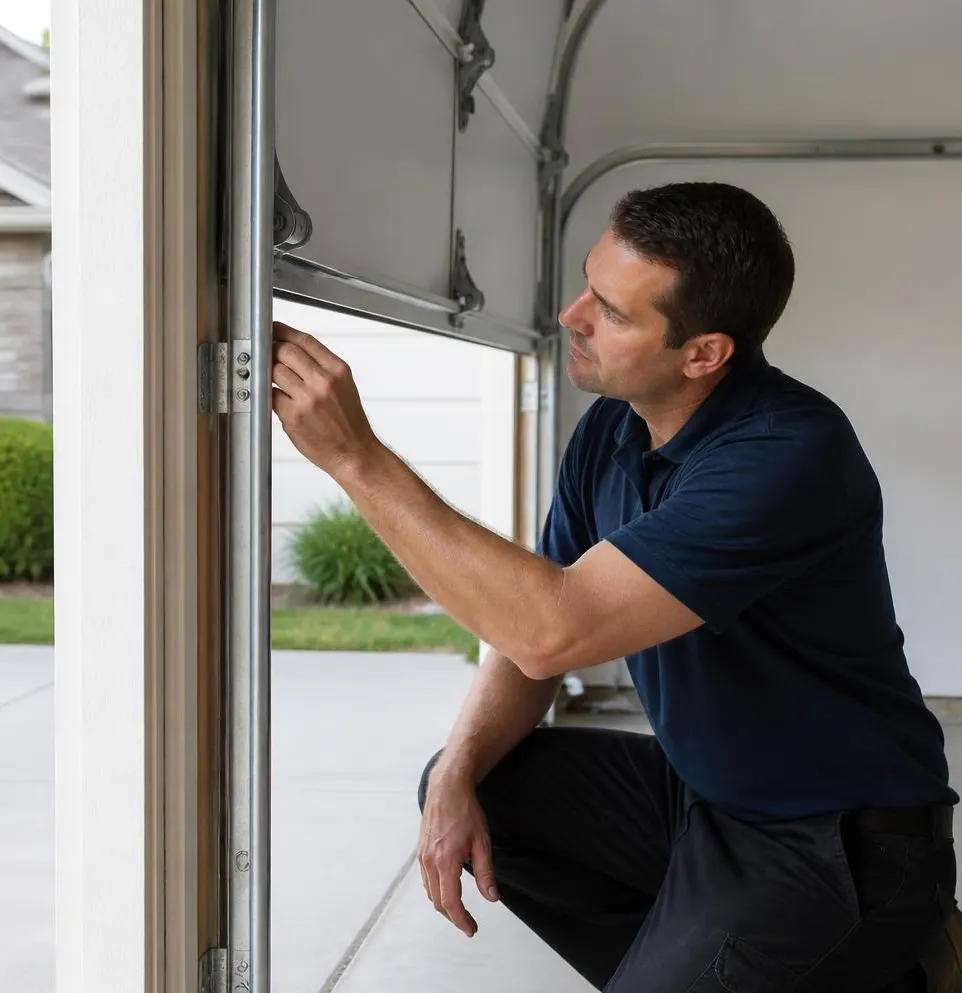
What a Technician Sees on This Call
The call usually starts the same way: "My opener is so loud it shakes the house," or "It's grinding and I don't know if I need a new opener or a new door." On a service visit, we'll often find a chain-drive opener from the 1990s still bolted to the rafters of a garage attached to an original wood door — the kind of setup common in this area's older housing stock. The chain is dry, the rail is sagging slightly, and every freeze-thaw cycle this winter has loosened another bracket. The homeowner isn't sure if they need a new chain, a new motor, or a whole new system. That's usually the moment to talk through what each drive type actually does, instead of just swapping in whatever was there before.
The Four Opener Types at a Glance
Chain Drive
A metal chain pulls the trolley along a rail, the same way a bicycle chain works. It's the oldest, most common design, and for good reason: it's strong enough to handle heavy doors, including older solid-wood doors that are thicker and heavier than modern insulated steel ones. The trade-off is noise — metal-on-metal contact transmits vibration through the rail and into the house framing, which matters if the garage sits under a bedroom or shares a wall with living space.
Belt Drive
Same basic mechanism as a chain drive, but the chain is replaced with a reinforced rubber or polyurethane belt. It's noticeably quieter — often the right call for an attached garage. Belts hold up well over time, though in a climate with real temperature swings, a belt that's been stretched and flexed through many winters eventually loses tension and needs adjustment or replacement, same as a chain would.
Screw Drive
The trolley rides along a threaded steel rod instead of a chain or belt. Fewer moving parts means less to break, and screw drives are relatively low-maintenance by design — except for one thing: they depend on grease staying properly applied to the rod. In cold weather, that grease can thicken, and if it's not serviced, the drive works harder and wears faster. Screw drives are a reasonable middle ground on noise, but they're the type most likely to suffer if routine lubrication gets skipped during a long winter.
Direct Drive
Instead of a trolley moving along a stationary rail, the motor itself travels along the rail while the chain stays fixed. This design has the fewest moving parts of any opener type, which translates to the quietest operation and the least routine maintenance. It costs more upfront, but there's simply less to wear out, corrode, or loosen over a decade of freeze-thaw cycles.
Noise, Price, and Lifespan Side by Side
- Chain drive: Loudest option. National price range typically $150–$250 for the opener unit. Lifespan around 10–15 years with regular lubrication. Best raw power for heavy doors.
- Belt drive: Quiet, smooth operation. National price range typically $200–$350. Lifespan around 10–15 years. Good for garages near living space.
- Screw drive: Moderate noise, fewer parts to fail. National price range typically $180–$280. Lifespan around 10–15 years, but shorter if lubrication is neglected in cold weather.
- Direct drive: Quietest, lowest maintenance. National price range typically $300–$450. Lifespan often 15–20+ years thanks to minimal moving parts.
What Actually Matters for Homes in This Area
Two local factors change this calculation more than most buying guides admit. First, a lot of homes here still have their original garage doors — thicker, heavier, sometimes slightly out of square after decades of seasonal movement. A heavier door needs an opener with enough torque to handle it without straining, which usually points toward chain drive or a higher-horsepower belt or direct-drive unit, not the cheapest screw-drive model on the shelf.
Second, the freeze-thaw cycle here is hard on anything with grease, tension, or fine moving parts. Rails loosen, chains stretch, and screw-drive lubrication thickens right when the door is working hardest to break free of ice or a frozen bottom seal. If an opener isn't serviced before winter, whichever type it is will show stress faster than it would in a milder climate.
Our Recommendation for Typical Homes Here
For an older attached garage with a heavy original door, a well-matched chain drive is still a solid, affordable choice — as long as it's serviced before winter. For a garage under or beside living space, belt or direct drive is worth the extra upfront cost for the noise reduction alone. Screw drives are fine for detached garages that get visited less often, but they're not the best fit for homeowners who won't keep up with cold-weather lubrication. If budget allows and the garage sits anywhere near a bedroom, direct drive is the lowest-maintenance, longest-lasting option on this list.
When to Call Colchester Garage Door
If your opener is grinding, slipping, or struggling as temperatures drop, don't wait for it to fail on a sub-zero morning. We handle Garage Door Opener Repair & Installation for all four drive types, and we'll size the right unit to your actual door — not just swap in the same chain drive that's been straining for fifteen years. Pair that with our Garage Door Maintenance service before winter sets in, and you'll avoid the mid-January emergency call altogether.
Call Colchester Garage Door today to get your opener checked and ready for winter — serving Colchester, CT and the surrounding towns.